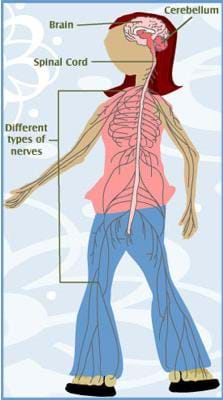
Last week, our guest from OMSI helped us to kick-off our Human Body units. Over the next few months, we will focus on three important systems in the body; the skeletal, muscular, and nervous systems. After winter break we will move on the our sensory organs with sight and hearing, too. We began with a brief review of the seven important, interconnected systems; skeletal, muscular, nervous, digestive, excretory, circulatory, and respiratory systems.We will now begin looking in greater depth at the skeletal system, the difference between axial (green in picture) and appendicular (purple) bones, the different types of muscles, and the way in which the central nervous system controls these interconnected systems.
Below are some suggestions for activities that you may do at home to reinforce what your child is learning about the human body:

Draw and Write
Have your child draw and write what he is learning about the human body and its interconnected systems, such as the way in which the muscular system is connected to the skeletal system. Your child will learn that the skeletal system provides the structure, or framework, for the body, while the muscular system enables the bones in the skeletal system to move. Ask your child to draw a picture of the way in which the skeletal system provides protection for the nervous system, such as the way the skull serves as a helmet-like structure that protects the brain. Ask questions to help your child use the vocabulary she is learning at school.
A Song and a Game: "Dem Bones" and Simon Says
Review the parts of the human body by singing hte song "Dem Bones" and by playing Simon Says. If you are not familiar with the song, try to find a recording and the lyrics online to share with your child. Ask questions to help your child tell you the more technical names for the bones and muscles that he has been learning at school (i.e., the skull is the cranium, the "thigh bone" is the femur, etc.) For the game Simon Says, have your child locate boens, examples of muscles, and examples of joints he has learned in class.
Muscles
Your child will be learning about different types of muscles and the way in which muscles work. Ask your child to explain how muscles work in pairs to control movement of the skeletal system; when one muscles of the pair contracts, or gets shorter, the other muscle in the pair relaxes, or gets longer. Your child will learn about both voluntary muscles (such as the bicep and hamstring) and involuntary muscles (such as the hear the the muscles in the digestive system). Ask your child to describe the difference between these two types of muscles and to give an example of each.
 Words to Use
Below is a list of some of the words that your child will be learning about and using. Try to use these words as they come up in everyday speech at home.
- interconnected- the systems of the human body are interconnected, so if one system develops a problem, it will often cause a problem with another system
- structure- the skeletal system provides the body with its structure, just like the frame of a house provides the building with its structure
- appendages- appendages are things that are attached to, or are a part of, a larger, more central thing, such as an arm or leg attached to the torso
- vulnerable- athletes who play contact sports without helmets leave their heads vulnerable to serious injury
- consciously/unconsciously- I was so consciously focused on listening carefully to the teacher, that I unconsciously dropped my pencil.
Looking Ahead:
 On Thursday, October 30th, we'll be making Skeletal System t-shirts. Your child will need one oversized/adult plain white t-shirt that can be painted on. The longer the shirt, the better, and if you don't have a completely plain shirt, a printed shirt can be turned inside out. I will also need 2-4 parent helpers that day, from 12:15-1:15 to assist with the processing of the shirts. If you can help out, please let me know. Thank you!
Whew! That was a long post! If you read all the way to the bottom, please write the word cranium in your child's planner and they will receive a dojo point! Thank you for reading!
Mrs. Gausman

No comments:
Post a Comment